诊室到患者日常
居家健康管理是一款面向院外场景的 AI 健康管理产品,运行在家庭场景的 Pad 上,衔接医生与患者之间的空白地带。复诊结束、患者回到家里之后,怎么理解医生的建议?检查报告里的异常指标意味着什么?康复训练、饮食管理、用药提醒,怎样才能真正坚持下去?这些看似琐碎的问题,恰恰决定了院外健康管理能不能落到实处。产品以 AI 健康助理「医生」为核心,全程语音交互,让患者不必反复打字、也不必学习复杂操作,只要开口说话,就能完成健康咨询、查看提醒、跟随康复训练。它不是让 AI 替医生面对患者,而是让医生的专业建议在院外被更好地理解、执行和追踪。
Home Health Management is an AI-powered health management product for out-of-hospital scenarios, running on a tablet in the home to bridge the gap between doctors and patients. After a follow-up visit, how should patients understand the doctor's advice at home? What do abnormal indicators in test reports mean? How can rehabilitation, diet management, and medication reminders truly stick? These seemingly trivial questions decide whether out-of-hospital health management can actually take effect. Centered on an AI health assistant with voice interaction throughout, patients can consult, check reminders, and follow rehab exercises simply by speaking — no repeated typing or complex learning. It does not let AI replace doctors before patients; it helps a doctor's professional advice be better understood, acted upon, and tracked beyond the hospital.
| 场景 | 用户 | 价值 |
|---|---|---|
| 诊后康复与用药管理、检查报告辅助解读、健康风险提示、阶段性咨询与长期陪伴 | 慢性病患者及家属、出院/复诊后的居家患者、需要院外随访管理的医生 | 减少医生的重复沟通与资料整理、让患者管理更有连续性、把专业建议变成每天能坚持的小行动 |
实名授权
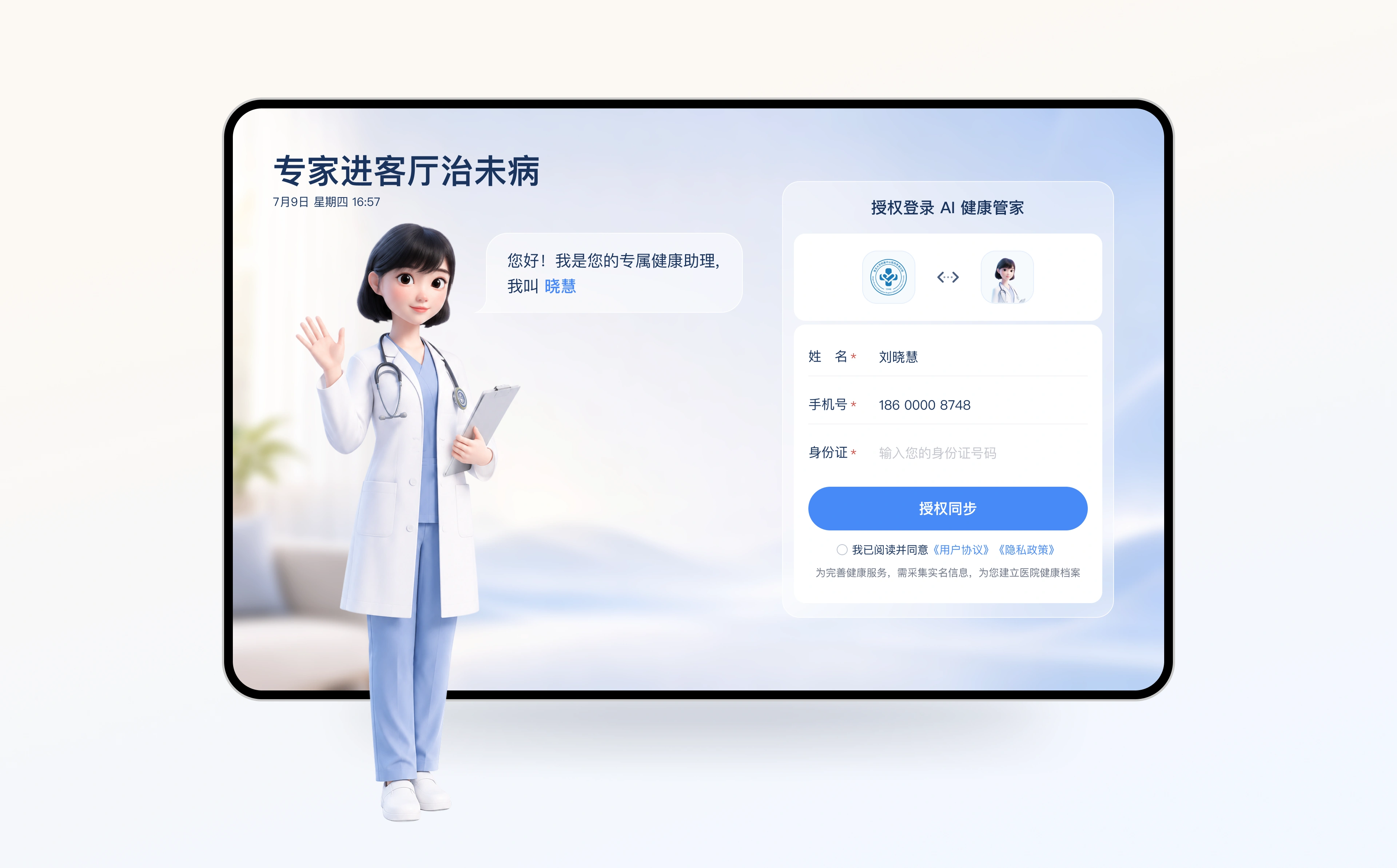
登录页是患者把院内档案带回家的起点。通过姓名、手机号、身份证完成实名授权,一键同步医院健康档案,将病史、检查报告与随访记录延续到院外日常。协议勾选前置,把数据采集的目的讲清楚,让信任建立在操作之前。
The login page is where patients bring their hospital records home. Through real-name authorization with name, phone number and ID card, hospital health records sync in one tap, carrying medical history, test reports and follow-up records into daily life outside the hospital. Agreement consent is placed up front, making the purpose of data collection clear so trust is built before any action.
首页总览
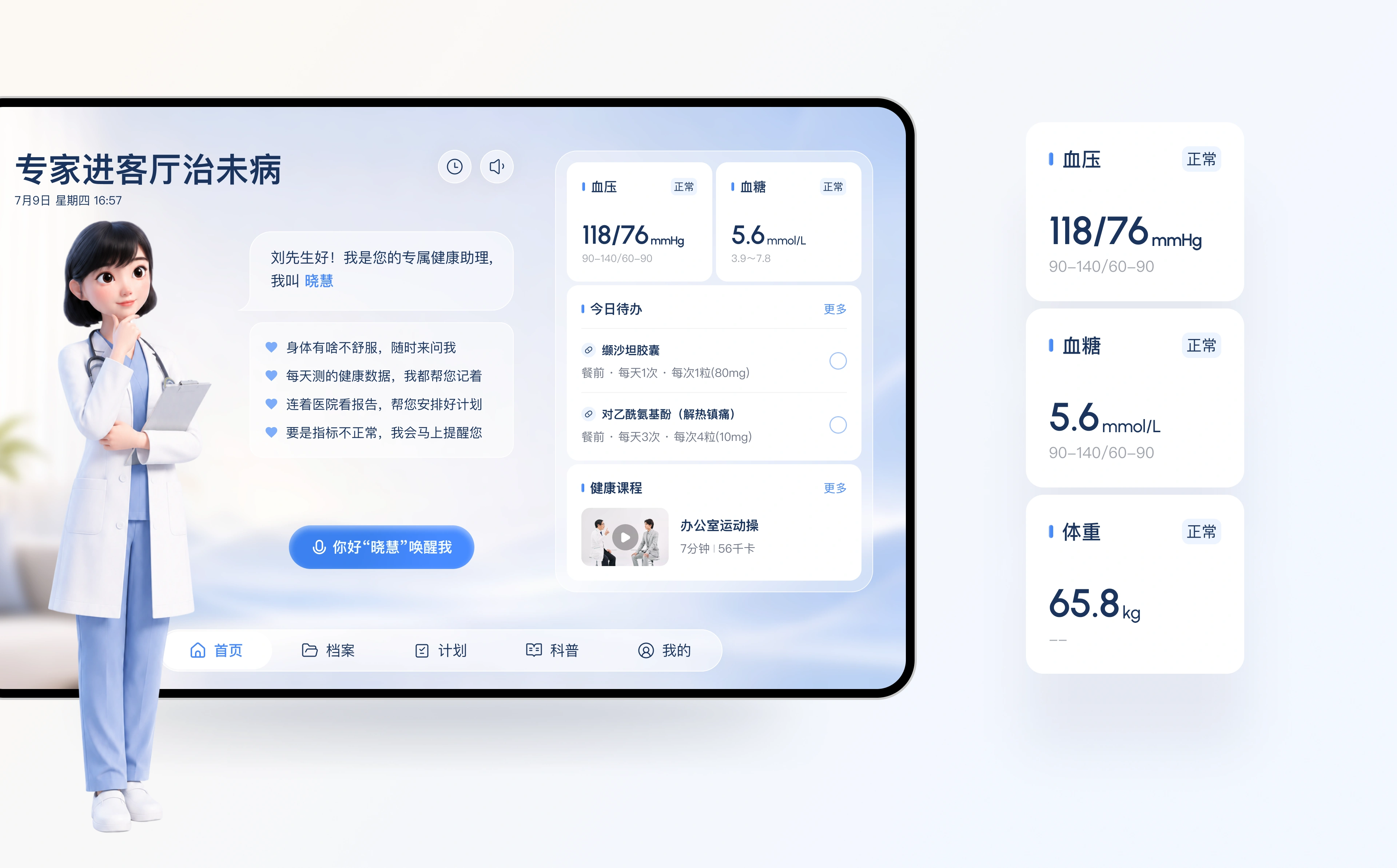
首页回答的是患者每天进门后最关心的三件事:指标怎么样、该吃什么药、今天做点什么。左侧的 AI 助理用「每天测的健康数据,我都帮您记着」这类口语化问候建立陪伴感,并通过语音入口延续全语音交互。右侧把血压、血糖做成带参考范围的指标卡,用「正常」标签一眼给结论,「今日待办」承接用药提醒,「健康课程」承接康复与运动,底部五个入口构成了整个产品的信息架构骨架。
The home screen answers the three questions patients care about most every day: how are my indicators, what medication should I take, and what should I do today. The AI assistant builds companionship through warm greetings and a voice entry that carries the full voice interaction. Blood pressure and blood sugar appear as indicator cards with reference ranges and clear "normal" labels, with today's tasks and health courses below, and five bottom tabs forming the product's information architecture.
语音交互
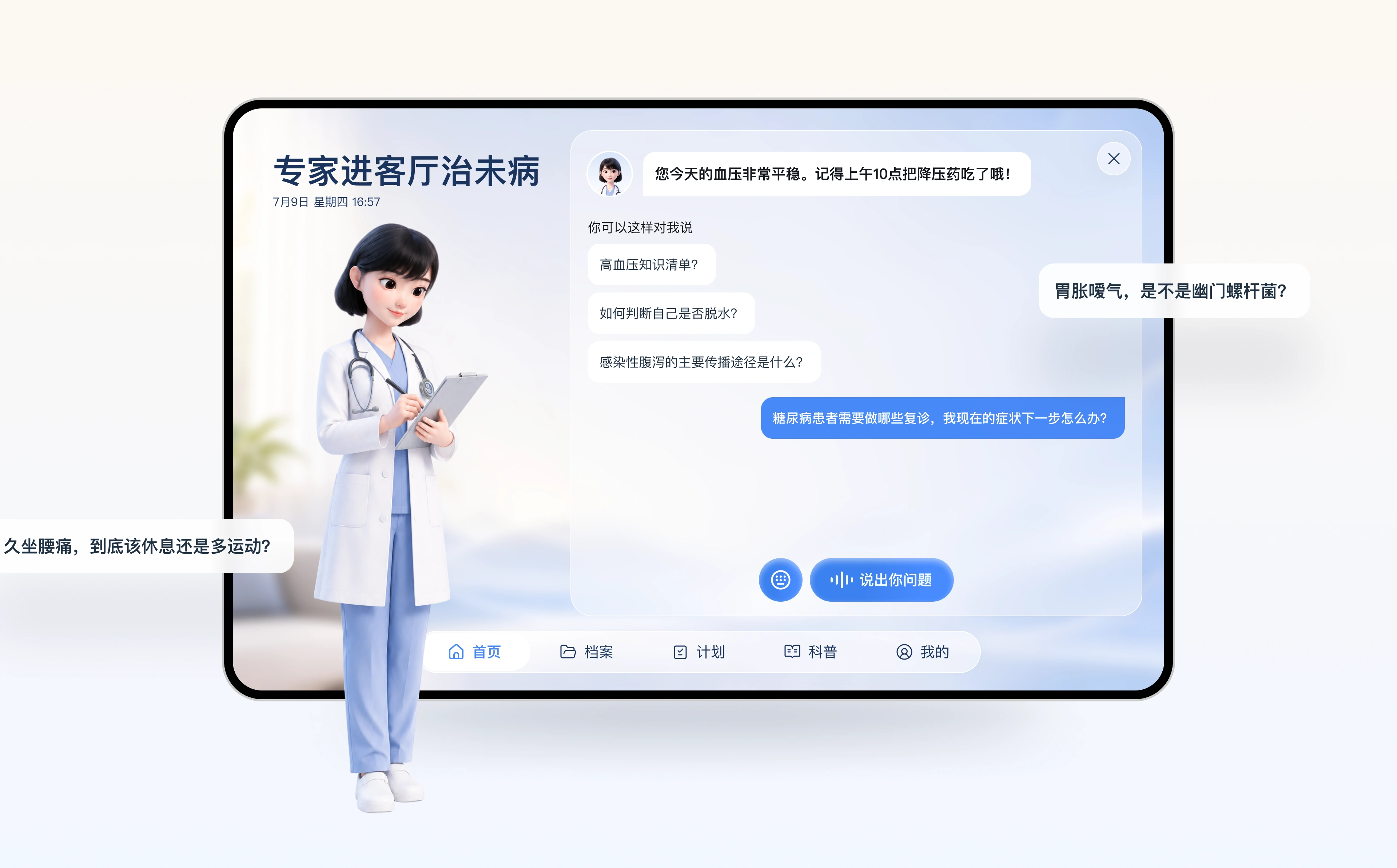
老年患者和慢性病群体往往不擅长打字,也不愿意学习复杂操作,语音因此成为产品的核心交互形态。这一屏展示了语音问诊的完整回路:AI 主动提醒「血压平稳、记得吃药」之后,用「你可以这样对我说」给出三个可点选的引导问题,替用户解决「不知道该怎么问」的冷启动难题;屏幕两侧飘出的语音气泡,则还原了真实家庭里随口提问的场景。它的设计意图,是让专业咨询从「查字典式的检索」变成「说话就能问」的自然对话,再通过权威医学知识库把专业内容转译成患者在居家场景里也能理解的表达。
Elderly patients and chronic-care groups often struggle with typing and are reluctant to learn complex operations, so voice becomes the product's core interaction. This screen shows the full loop of voice consultation: after the AI reminds "blood pressure is stable, remember your medication," it offers three tappable guided questions to solve the cold-start problem of not knowing what to ask, while floating voice bubbles recreate how families ask questions casually at home. The intent is to turn professional consultation from dictionary-style searching into a natural "just speak" conversation, then translate professional content through an authoritative medical knowledge base into expressions patients can understand at home.
健康档案
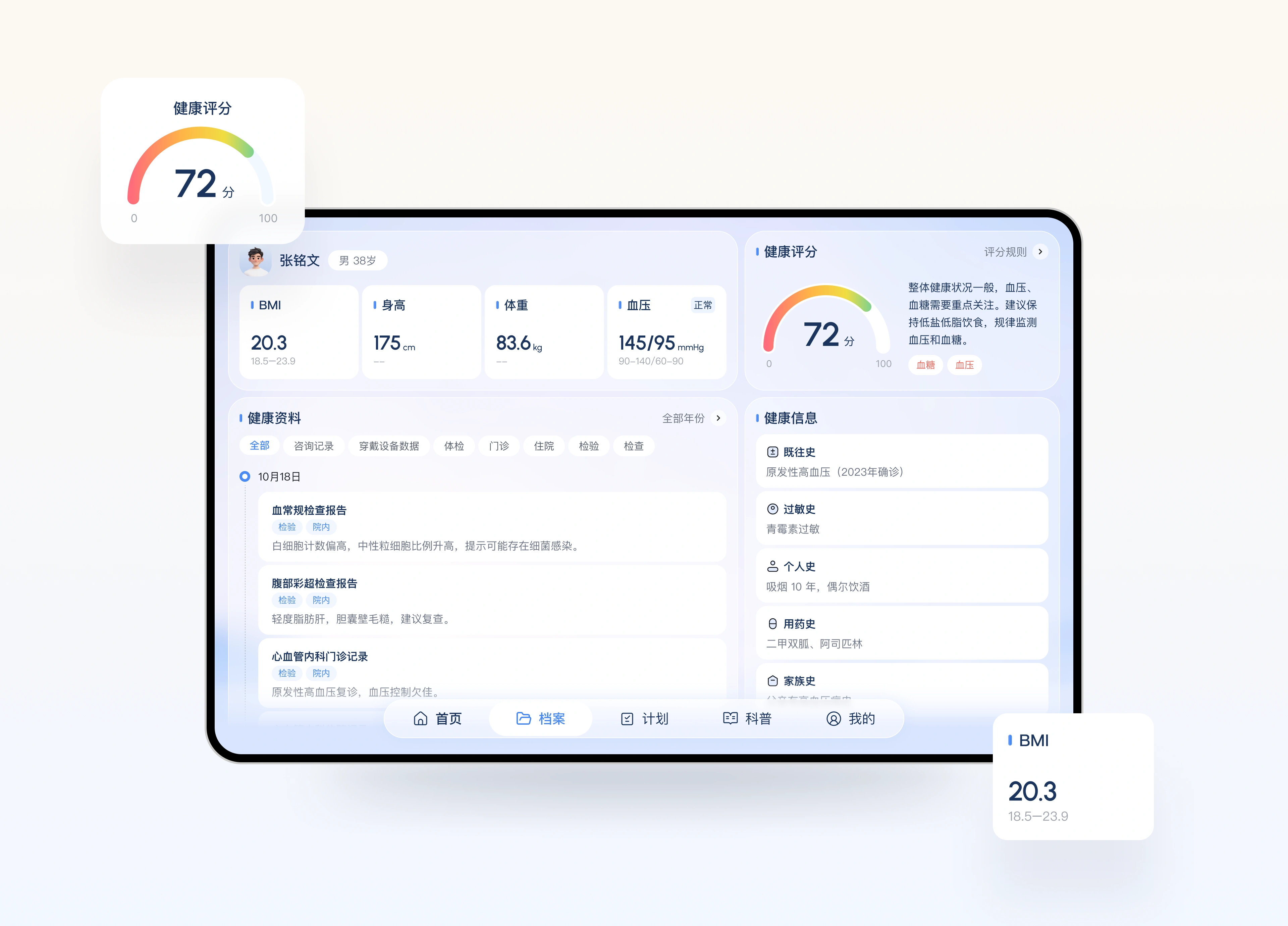
档案页是「连续管理」能力的落点。顶部用 BMI、身高体重、血压等指标卡给出当下状态,右侧的「健康评分」把复杂的检查结果抽象成一个直观的仪表盘,让患者和家属一眼抓住重点。左侧的时间轴按「咨询记录、穿戴设备、体检、门诊、住院、检验、检查」分类,把散落在不同来源的资料串成一条可回溯的健康脉络;「既往史、过敏史、个人史、用药史」的沉淀,则为医生开展专业咨询、随访管理和患者教育提供了一份完整的辅助参考。
The records page is where continuous care takes shape. Indicator cards for BMI, height, weight and blood pressure show the current state, while the health score on the right abstracts complex test results into an intuitive gauge so patients and families grasp the key points at a glance. The timeline on the left categorizes consultation records, wearables, checkups, outpatient, inpatient, tests and examinations, threading scattered data into a traceable health history, while the accumulated past, allergy, personal and medication history provides doctors a complete reference for consultation, follow-up management and patient education.
健康计划
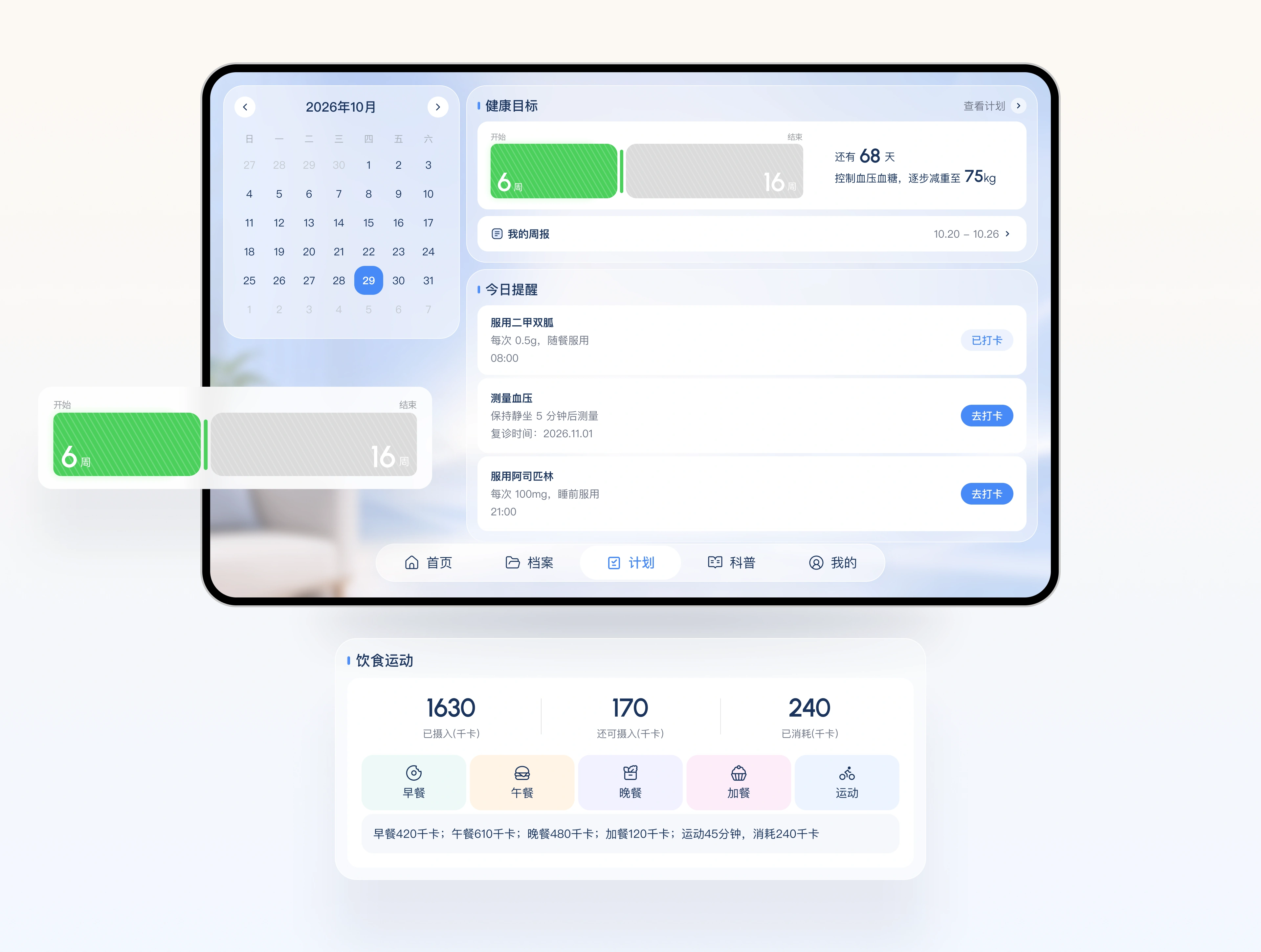
医生的一句话建议,落地到患者手里往往是一堆记不住的细节,计划页解决的就是「怎么坚持」。左侧用日历呈现每日安排,右侧的「健康目标」用进度条把长期目标拆成可感知的阶段;今日提醒把服药、测血压等事项逐条列出,并配上剂量、时间与「去打卡 / 已打卡」的明确动作,下方的饮食运动卡片把热量管理变成看得见的反馈。整套设计的核心,是让专业建议从「听过就忘」变成「每天能做、能坚持、能追踪」。
A doctor's one-line advice often becomes a pile of details patients can't remember, and the plan page is about making it stick. A calendar on the left lays out daily arrangements, while health goals on the right break long-term targets into perceivable stages with progress bars. Today's reminders list medication and blood-pressure tasks with dosage, timing and clear check-in actions, and the diet and exercise cards turn calorie management into visible feedback. The core of the design is turning professional advice from "heard and forgotten" into something that can be done, sustained and tracked every day.
健康科普
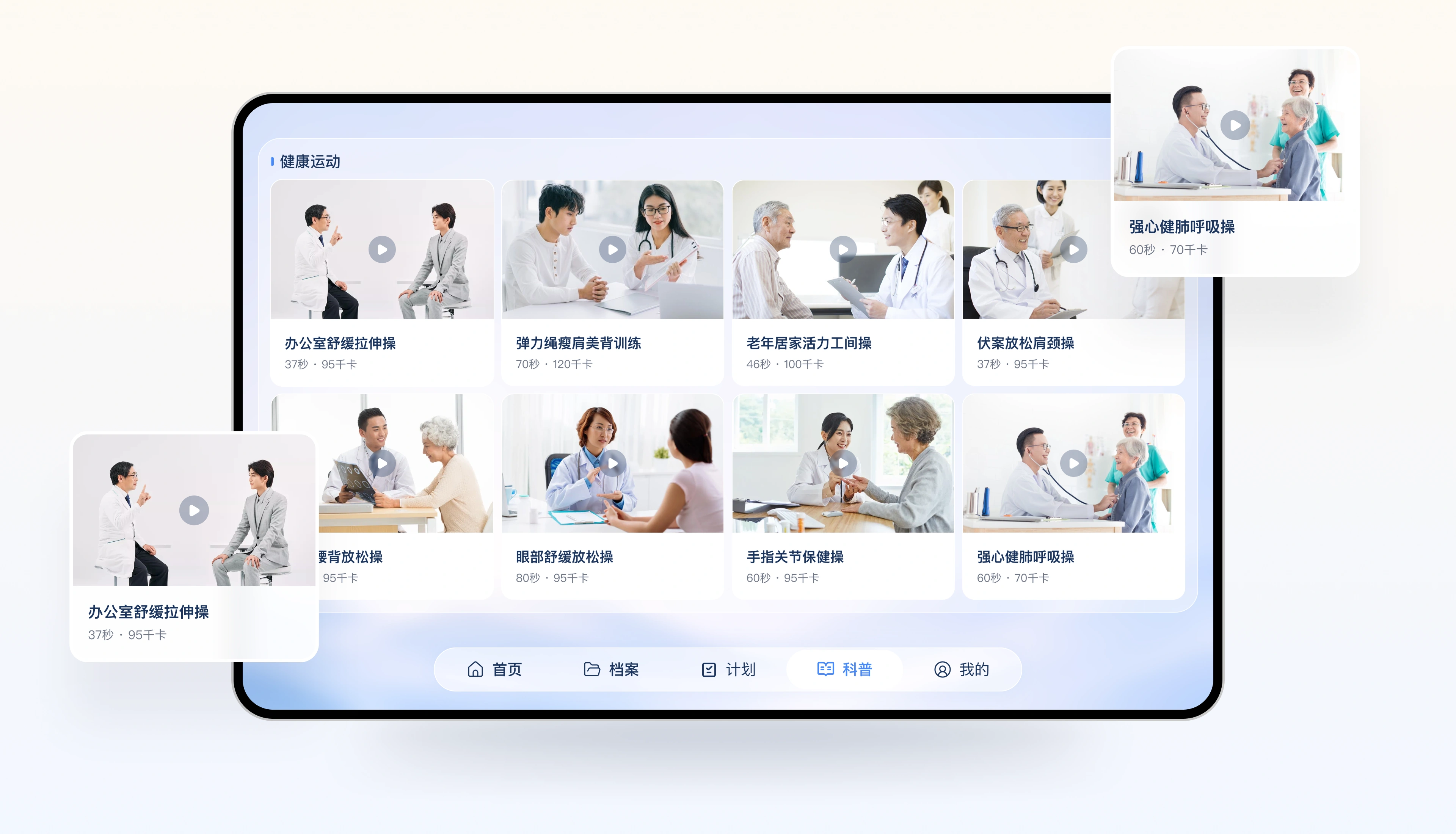
围绕「筛、防、诊、治、康、养」理念里的「康」和「养」,科普页把专业的康复与运动指导,转译成一屏多条、每条约几十秒的短视频——办公室舒缓拉伸操、强心健肺呼吸操、手指关节保健操,每张卡片都标出时长和消耗的热量。对患者来说,跟着视频做比阅读文字说明的门槛低得多,时长和热量数字则提供了「要不要做、做多久」的预期。它承接了诊后康复支持这一环,让医生开出的运动处方,在家里就能被理解和执行,而不是停留在医嘱纸面上。
Around the "recovery" and "wellness" parts of the screen-prevent-diagnose-treat-recover-nurture philosophy, the education page turns professional rehab and exercise guidance into a grid of short follow-along videos — office stretching, cardiopulmonary breathing exercises, finger-joint exercises — each card labeled with duration and calories burned. Following a video is far easier for patients than reading text, and the duration and calorie numbers set expectations for whether and how long to do them. It carries the post-diagnosis rehab support, helping a doctor's exercise prescription be understood and followed at home rather than left on paper.
设计原则
| 信任前置把数据采集目的、协议与机构背书讲在操作之前 | 语音优先让「说话就能问」替代打字与复杂学习 | 连续可追踪把医嘱沉淀成档案、计划与每天可打卡的小行动 |